

01 / FLAVOUR DIRECTION
BERRY & TEA
Compare a fruit note with a finished tart tea.
Refreshing ideas for flavouring a glass of finished kombucha without improvising the fermentation process.
FIND THE IDEAS ↓
Kombucha is a live fermented tea. Keep flavour trials separate from the starter culture and make the first tasting in a chilled, finished 250 ml serving.
Compare a fruit note with a finished tart tea.

Explore a carefully measured citrus finishing touch.

Discover apple and spice flavour pairings.
Open a recipe for quantities and an original step-by-step method. Ready-made cordial or syrup quantities are not dosing recommendations for concentrated KingFlavours products.
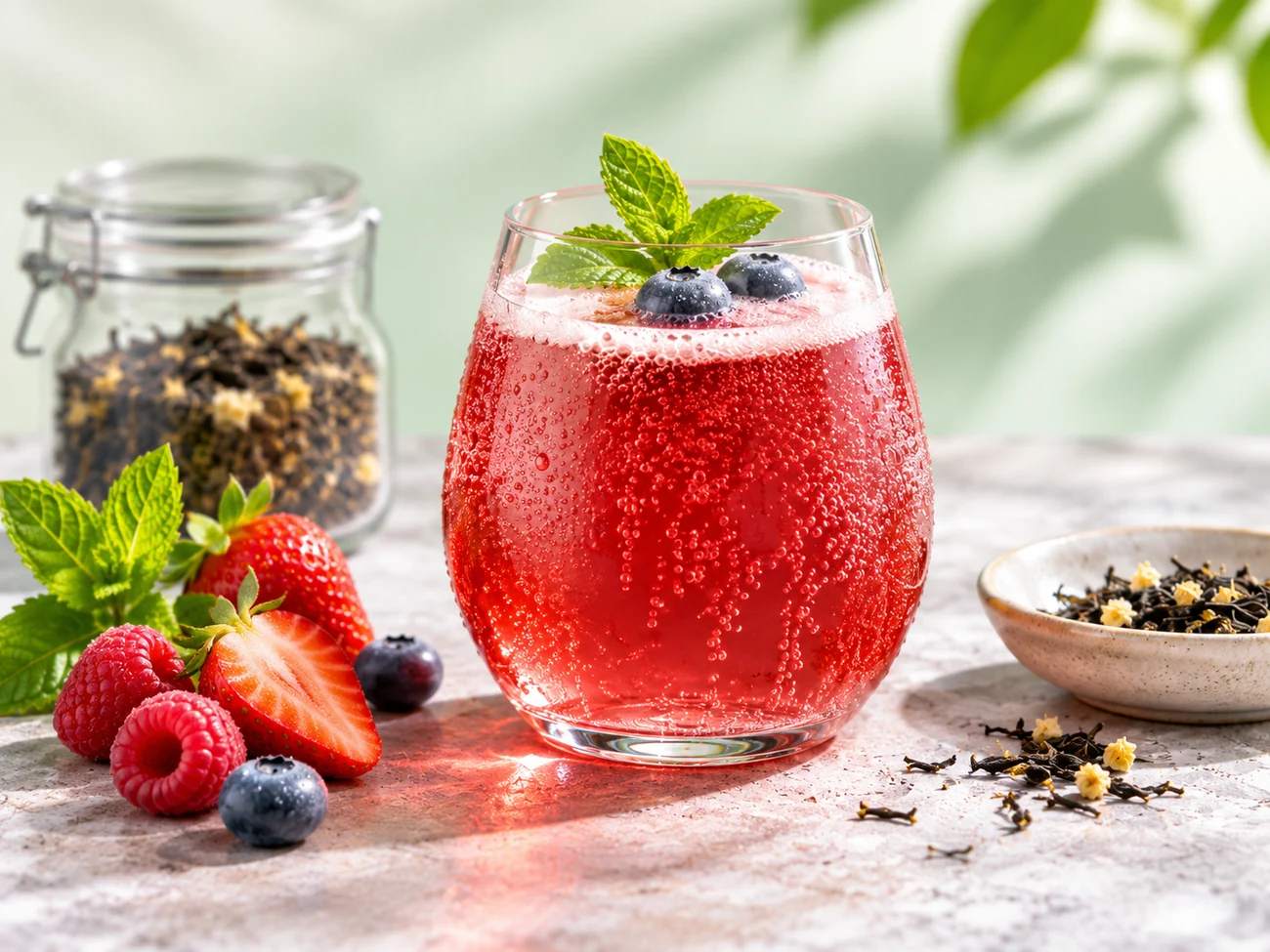 FINISHED BEVERAGE • 260 mlBerry kombucha tasting glass
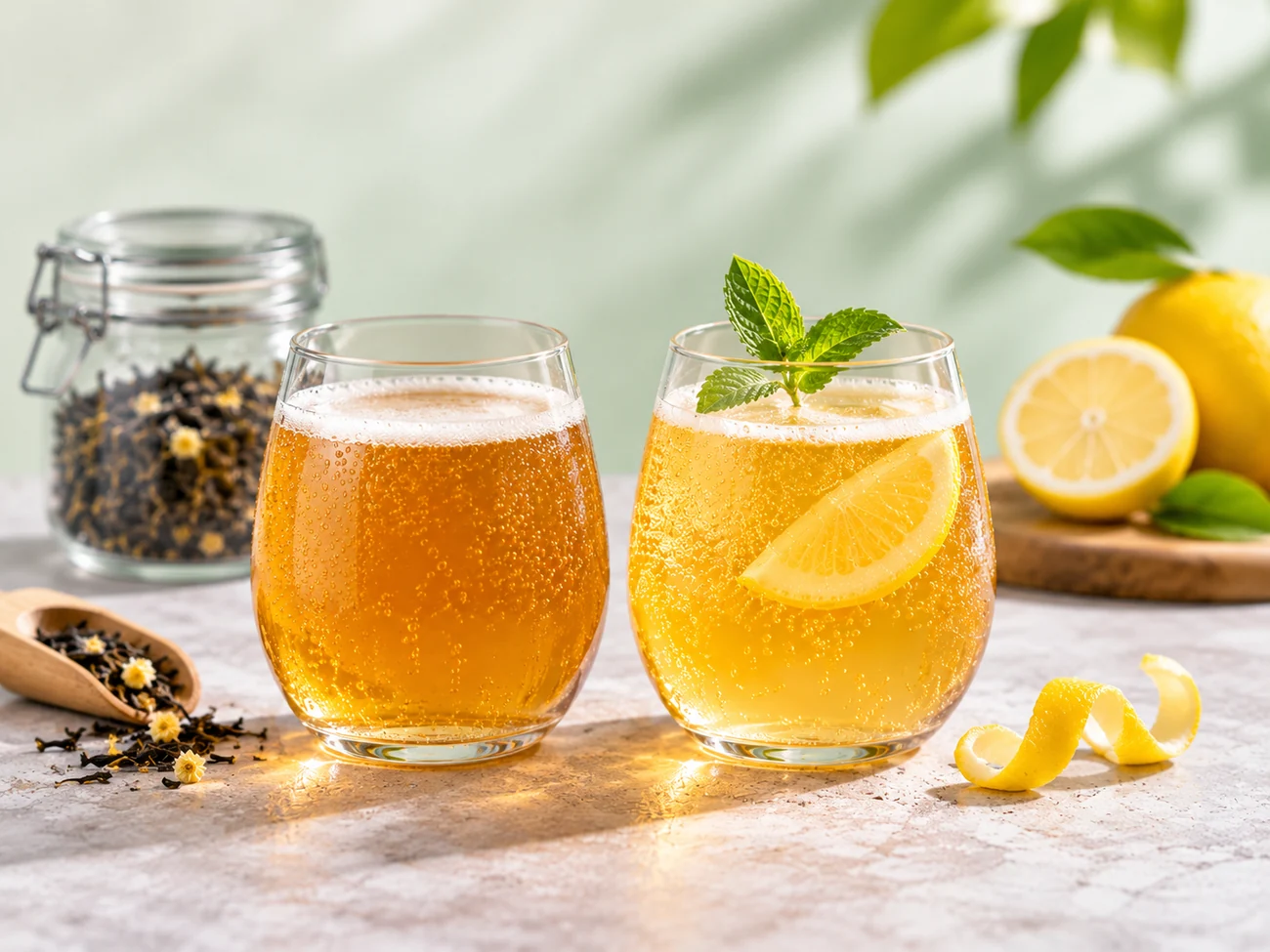 SIDE-BY-SIDE • TWO SMALL GLASSESCitrus tasting comparison
Test flavouring in a finished, chilled serving first. Avoid adding unverified concentrates to a SCOBY or starter culture.
Sugar additions can restart fermentation, raising pressure and potentially alcohol content, even after bottling.
Use clean equipment and a reliably prepared kombucha. Refrigeration slows but does not eliminate fermentation.
We describe taste and recipe development, not probiotic benefits or health effects of a modified beverage.
These listings are flavour-profile inspiration only, not proof of compatibility with this application. Check individual product documentation before use.
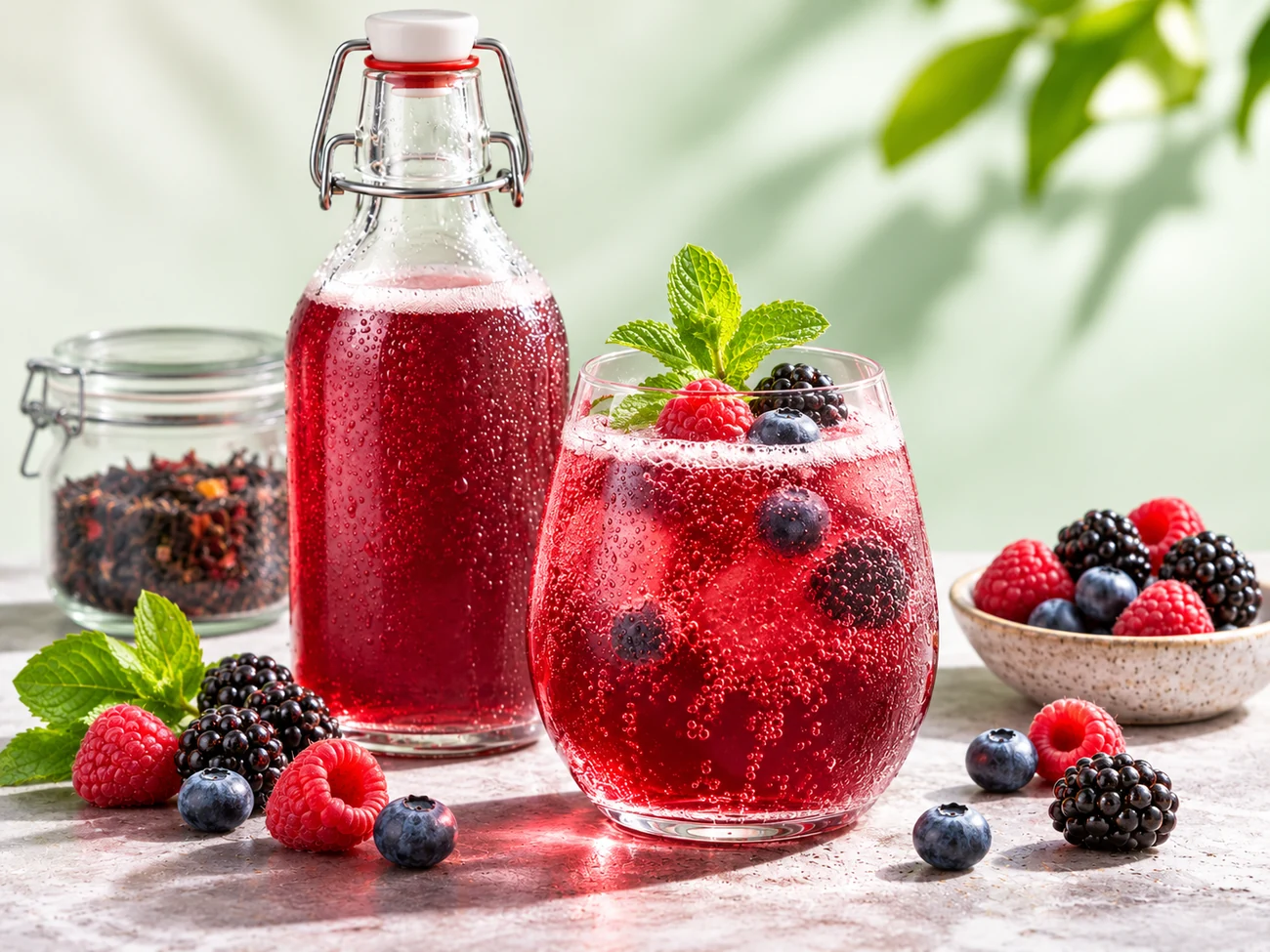
Explore the flavour profile. Confirm the exact concentrate is suitable for this beverage or food before using it.
VIEW PRODUCT & SIZES →
Explore the flavour profile. Confirm the exact concentrate is suitable for this beverage or food before using it.
VIEW PRODUCT & SIZES →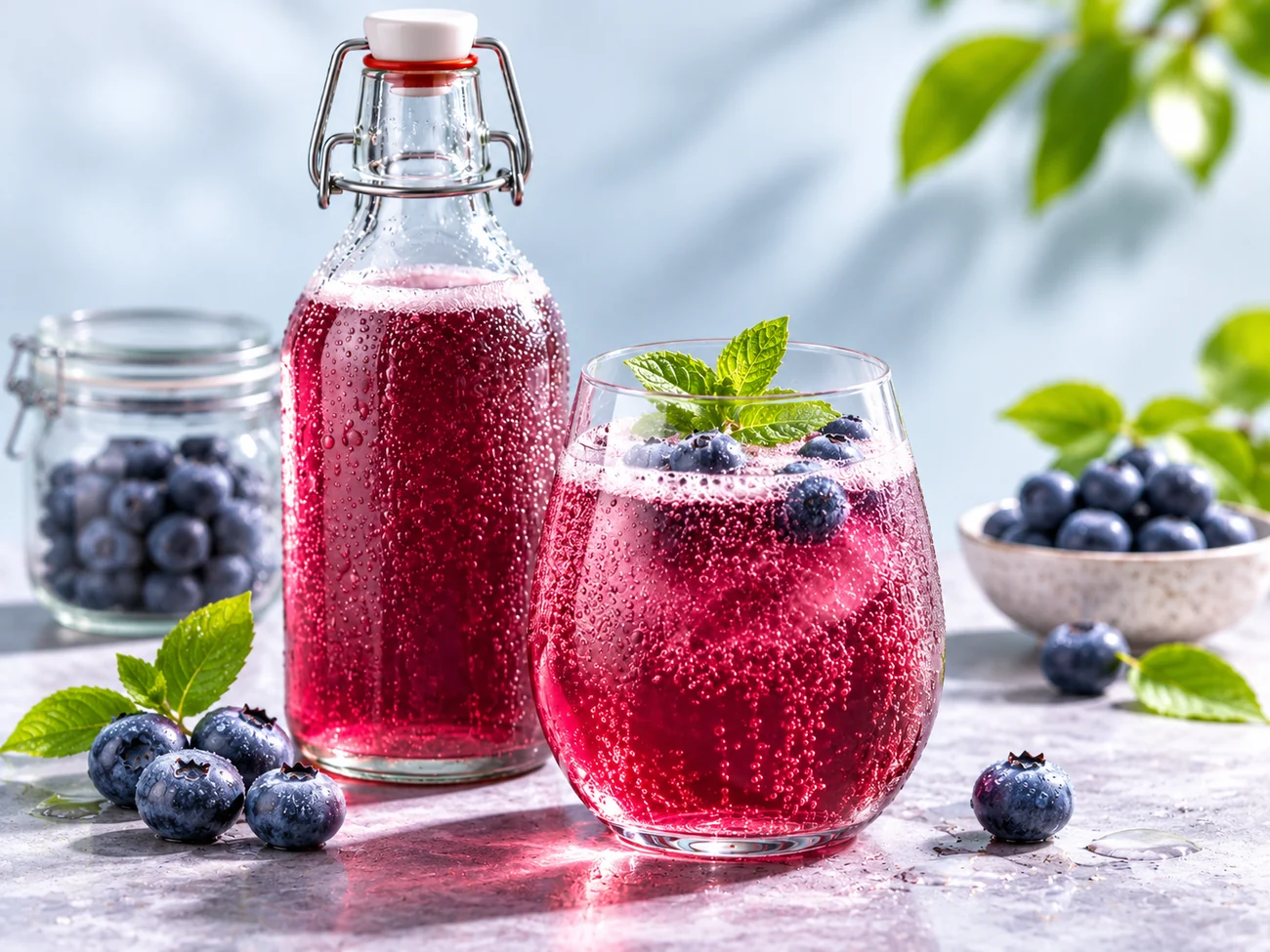
Explore the flavour profile. Confirm the exact concentrate is suitable for this beverage or food before using it.
VIEW PRODUCT & SIZES →For a simple home trial, flavour a finished chilled glass immediately before drinking. Second-fermentation procedures have additional pressure, alcohol and hygiene risks and need validated guidance.
Do not assume so. The particular flavouring and carrier may alter the culture; seek product-specific suitability and a validated fermentation process.
Live yeast can consume added sugars and produce carbon dioxide. Uncontrolled secondary fermentation may create pressure and alcohol, especially in sealed bottles.
No. Fermented kombucha can contain alcohol, and levels can change after bottling. Commercial production needs appropriate testing and compliance.